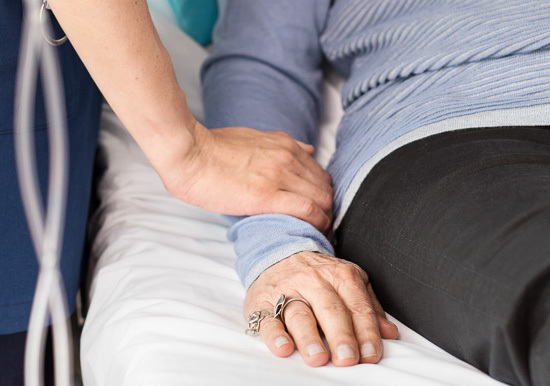




The number of Norwegian patients increased in 2023
Docrates Cancer Center has been treating Finnish and international patients in Helsinki for more than 15 years. In 2023, the...
Read moreMon-Thu 8-18, Fri 8-16

Colorectal cancer is the common name for colon cancer and rectal cancer. Colorectal cancers are the second most common cancer in Europe, and the third most common type of cancer in Finland after prostate cancer and breast cancer.
Approximately 3800 Finns fall ill with colorectal cancer every year, and the incidence is estimated to grow in the future, mainly due to the ageing of the population. However, the prognosis for colorectal cancer is good: 61% of the people falling ill are alive in five years from the diagnosis, and the survival rates are predicted to improve when screening increases and therapies improve.
At Docrates Cancer Center, people with colorectal cancer receive a comprehensive diagnosis, therapy and follow-up without delay and with expertise based on years of experience. The state-of-the-art imaging equipment in our use and the competence of our clinical staff allow us to customise the treatment in an optimal manner for each patient.
Tuomo Alanko, our Chief Physician, is a highly respected specialist in colorectal cancers, with years of experience in the treatment of patients with colorectal cancer. Alongside other forms of treatment of colorectal cancer, Docrates offers intestinal cancer patients first-class pharmacotherapy, which is started without delay and paying particular attention to its optimal implementation.
At Docrates, every patient has his or her personal doctor and dedicated care team, with whom an individual treatment plan is prepared, listening to the patient. Our comprehensive support services guarantee good preconditions for recovering and maintaining good quality of life despite the cancer.
Docrates Cancer Center has been treating Finnish and international patients in Helsinki for more than 15 years. In 2023, the...
Read more
Docrates Cancer Center joined forces with Medanta, a pioneer in healthcare workwear, to create a more functional workwear collection for...
Riikka Talsi, M.Sc. (Tech), who defended her doctoral thesis at Aalto University School of Science, Department of Industrial Engineering and...

Cancer. The word alone makes the heart beat faster and fills people's minds with questions. What if I have cancer?...
Contact us!
Mon-Thu 8:00-18:00, Fri 8:00-16:00